
A desert safari starts before you reach the sand. It starts when you work out where to wait, which vehicle to look for, and how you will get back afterwards. Those small details can change the price and the whole feel of your day.
This desert safari pickup Dubai guide explains hotel collection, shared transfers, private cars, meeting points, and self-drive plans in plain language. It also shows how to compare transport costs without confusing a low starting price with the final amount your group will pay.
Package details can change. Use the current tour page and your written booking confirmation for your actual date, address, guest count, and inclusions. The examples below are planning examples, not promises of a particular vehicle, route, or arrival time.
What does desert safari pickup mean?
Pickup means the arranged place and time where your transfer begins. For one package, this may be your hotel entrance. For another, it may be a named meeting point where several guests gather. A self-drive booking may begin at a camp or another agreed location outside the city.
The word pickup alone does not tell you whether transport is private, whether you will collect other guests, or whether the same vehicle will take you onto the dunes. Ask about each part separately. A clear answer is more useful than a general promise that transport is included.
Start by browsing the Dubai desert safari packages. Choose the experience you want first, then check how its transport works. This helps you avoid booking an attractive activity package that begins somewhere difficult for your group to reach.
Compare the four main transport choices
Shared hotel pickup
With shared pickup, you book seats rather than an exclusive vehicle. Other guests may join the same journey. The operator plans the collection order around the addresses and the day's route. Your hotel might be the first stop, a middle stop, or the final collection.
This can suit couples, solo travellers, and small groups who are comfortable following a shared plan. It is worth asking whether everyone in your booking will travel together. A shared seat also does not normally mean that you can choose a particular position inside the car.
Private hotel pickup
A private transfer reserves the agreed vehicle service for your booking. It can make communication easier when several family members are travelling together. However, a private car does not automatically include a private camp, private dinner table, longer activities, or unlimited changes to the route.
Read the private family desert safari details and ask what is exclusive. Check the permitted passenger number, luggage space, child-seat arrangements, and collection area. These practical details matter more than the word luxury in a short advertisement.
Meeting-point pickup
A meeting-point transfer begins at a specific location rather than your accommodation. It may suit someone staying nearby or a group that can reach the point easily. The saving can disappear if you need long taxi journeys in both directions, so compare the full trip.
Ask for a map pin, a written landmark, the reporting time, and the contact number to use if you cannot find the vehicle. A large station, shopping centre, or car park may have several entrances. The name of the building is not always enough.
Self-drive to the agreed location
Self-drive usually means you arrange your own journey to the agreed meeting place. It does not mean you can take a normal rental car onto the dunes. Find out exactly where the public-road journey ends and where the safari operator takes over.
Check parking, the return journey after dark, and whether the location is a camp entrance or a transfer base. Never follow another vehicle off the road because it looks like a safari car. Use the instructions supplied for your own confirmed booking.
How pickup changes the total price
Transport is one reason two safari quotes can look very different. One may include collection and return from your address. Another may cover activities only. A third may include a transfer but charge extra for an address outside the standard collection area.
Compare the desert safari price guide alongside the actual package. Write down the unit used for the rate: per adult, per child, per person, or per vehicle. These are different ways of charging and should not be compared as if they were the same.
For a simple made-up example, imagine that one offer costs 100 units per person with transport included. Another costs 80 units per person, but your group must spend 120 units reaching and leaving its meeting point. For two guests, the totals are 200 and 280 units. The lower headline price is the higher overall cost.
This example is only arithmetic, not a current price offer. Make the same calculation with your written quotes. Add required transport charges, selected upgrades, and any other stated costs. Keep optional spending separate so you can see what is essential and what you chose.
Which Dubai areas can be collected?
Do not assume that every address described as Dubai is covered by every package. The collection route depends on the operator, tour, date, and exact location. A familiar area name does not confirm that your particular hotel or residential building is included.
Send your accommodation name and map pin when requesting a quote. If the hotel has several branches, include the correct branch. If you are staying in an apartment, share the building name, entrance, and nearby road access rather than only the apartment number.
Guests staying in places such as Dubai Marina, Downtown Dubai, Deira, Bur Dubai, or Palm Jumeirah should still check the exact address. These names are useful for planning, but they are not a coverage guarantee. Collection windows may also differ between areas on the same afternoon.
If you move hotels before the safari, tell the booking team as soon as possible. An address change may affect the route, timing, availability, or quote. Do not wait until the driver calls from the original hotel to mention the move.
Understand the pickup window
A pickup window is a period during which collection is expected. It is different from a fixed appointment at one exact minute. Shared routes, road conditions, hotel access, and the timing of the desert programme can all affect the final plan.
For example, a message might ask you to be ready during an afternoon window and provide a closer estimate later. Read what your own confirmation says. Do not use a time seen on someone else's review as the collection time for your booking.
The safari timings and return guide explains the wider day. Remember that pickup, arrival at the desert, the start of an activity, dinner, and hotel return are separate points. A six-hour experience does not necessarily mean six hours at the camp.
Where should you wait?
Ask whether to wait in reception, at the main entrance, or beside a named pickup point. Stay somewhere the driver can find you and where you can receive messages. Do not walk around a large property looking for a car while the driver is looking for you elsewhere.
For a hotel with more than one entrance, agree on one entrance in writing. If access is restricted, ask reception where outside vehicles normally collect guests. A short conversation with the hotel team before the pickup window can save several confusing phone calls later.
What to send when you request a booking
A useful booking request is short but complete. Give the travel date, package name, guest count, children's ages, exact collection address, and preferred transport type. Add the return address if it differs from collection. This gives the team enough information to check the right arrangement.
Mention practical needs before paying. These may include a folding stroller, large bags, difficulty using vehicle steps, or a request to avoid dune bashing. Describe what you need rather than assuming that a broad label such as family-friendly answers every question.
You can send a message like this: We are four guests travelling on our chosen date. Our hotel is this branch at this map pin. We would like an evening safari with hotel pickup and return. Please confirm whether the transfer is shared, the total price, the collection window, and any extra charges.
Keep the reply with your booking record. If several people in the group are asking questions, choose one person to hold the final confirmation. Different messages sent by different guests can otherwise create conflicting addresses, timings, and upgrade requests.
Shared transfers: what a normal journey can involve
A shared vehicle may stop at other accommodations before leaving the city. That does not automatically mean something is wrong. It is part of combining bookings into one route. Ask about the expected arrangement if extra stops would be difficult for your group.
Be ready when requested. A late departure from one hotel can affect everyone travelling in the vehicle. If you cannot find the agreed entrance, contact the driver or booking support promptly. Do not assume the vehicle will wait indefinitely while you finish another activity.
Keep small personal items together and avoid spreading belongings over spare seats. Other guests may join later. Before leaving the vehicle at a stop, ask what you need to take and when to return. Follow the driver's meeting instructions rather than copying another group's movements.
For a fuller comparison of comfort and flexibility, read shared versus private desert safari. Choose shared transport because the arrangement suits your day, rather than only because it is the first price shown in a search result.
Private pickup: useful questions before upgrading
Private transport can be a helpful choice when your group wants to travel together. It is especially useful to ask about when your party has different comfort needs or when several members would find a shared collection route tiring. Availability and flexibility still need confirmation.
Ask whether the quoted amount covers the whole vehicle or each guest. Check how many passengers can travel under the specific arrangement. Do not fill every advertised place before discussing child seats or unusual luggage, because the usable space and seating plan matter.
Also ask which parts of the day follow a set programme. Dinner service, camp entertainment, activity slots, and access rules may remain shared even when the journey is private. A private vehicle is one part of the booking, not a promise that every part becomes exclusive.
Planning pickup with children
Tell the team each child's age and discuss the required restraint arrangement before confirming the vehicle. Do not assume that an empty seat or an adult holding a child is an acceptable substitute. Ask for a clear answer about what will be supplied and how the seating will work.
Separate the transfer question from the activity question. A child being able to travel in the vehicle does not establish that every ride or activity is suitable. Discuss the planned experience and follow the operator's participation rules. Where you need individual health advice, ask an appropriate clinician.
Plan simple practical steps too. Use the toilet before collection, carry the small items you actually need, and explain that the journey may include waiting. The desert safari with kids guide can help you organise questions for the booking team.
Travelling with luggage, a stroller, or mobility needs
A safari vehicle is not automatically an airport-transfer vehicle with space for several large suitcases. Tell the team the number and size of your bags. Ask whether they can travel securely with your group and whether storage is available at any stage of the trip.
If you are checking out that day, ask your hotel about luggage storage before relying on taking everything to the desert. Keep passports, money, devices, and essential personal items under your own control. Avoid leaving valuables in an unattended vehicle or assuming staff will look after them.
For mobility needs, describe the practical issue: vehicle steps, walking distance, uneven ground, seating height, or toilet access. Ask which parts can be accommodated and which cannot. A gentler itinerary may still involve surfaces and transfers that need careful discussion.
Can you avoid dune bashing but keep pickup?
Some guests want the desert setting, dinner, and evening atmosphere without the dune-driving activity. Look at the safari without dune bashing and ask how the transfer reaches the camp. Do not assume every operator can make the same adjustment.
Explain the request when booking, not after the off-road section has begun. Ask whether you will travel directly to camp, wait at a base, or use another agreed arrangement. Get the practical route confirmed so nobody in your party expects a different plan.
A no-dune-bashing booking is not a medical guarantee or a promise of perfectly smooth travel. Road conditions, steps, and ground surfaces can still vary. If the reason for avoiding the activity is health-related, discuss suitability with your clinician and the operator before making a decision.
Meeting points: prevent three common mix-ups
The first mix-up is confusing the reporting time with departure time. Reporting gives the group time to gather and check in. Arriving only at the stated departure minute may be too late. Ask which time appears on your confirmation and plan your journey accordingly.
The second is using a nearby landmark instead of the actual map pin. Two car parks can be separated by a road that is difficult to cross. Open the supplied pin in advance and check the approach. If it looks unclear, ask before starting your journey.
The third is forgetting the return. Find out whether you come back to the same point and how you will get home from there. Check your onward transport plan before booking a meeting-point deal, especially if you are travelling with tired children late in the evening.
Self-drive plans need a complete return plan
If you choose self-drive, ask for written directions that stay on the approved access route. Check the arrival deadline, parking arrangements, and contact details for the person meeting you. Save the location before leaving, since you should not rely on finding information while moving.
Consider who will drive home after a full evening. Leave room in the plan for the journey back and avoid adding another demanding activity immediately afterwards. If driving after dark in an unfamiliar area sounds uncomfortable, compare the cost of an included transfer instead.
Do not treat a self-drive price as proof that any car can reach every safari location. The operator should explain the agreed public-road meeting place. Your rental agreement and vehicle suitability are separate matters; never assume off-road use is permitted.
Hotel changes, delays, and missed pickups
If your plans change, contact booking support early. Give the booking reference and explain the actual change: a different hotel, a delayed flight, a smaller group, or a new return address. Ask what can be changed and whether it affects the price or availability.
If the pickup window passes, first check your messages and the agreed entrance. Then contact the supplied support number. Stay in one clear location while sorting it out. Booking another transfer or leaving the hotel without speaking to the team can make it harder to reunite.
If you are late, ask what options remain. A shared route may not be able to return to collect you. Do not assume a missed transfer creates an automatic refund or a free replacement. Read the cancellation and no-show terms before payment, when you still have a choice.
Plan the drop-off before the day starts
Return transfer deserves the same attention as pickup. Ask whether the booking includes return to the original address and whether a different drop-off is possible. A driver may have other guests to return, so changing the destination at the last minute may not be practical.
Avoid booking a tight connection immediately after the safari. Return times are estimates rather than guaranteed airport-arrival times. If you have a flight, cruise departure, or another fixed commitment, discuss it before booking and leave a suitable margin for your own circumstances.
At the end of the evening, use the agreed meeting point and keep your group together. Check that you have your phone, bags, and personal items before the vehicle leaves. A calm departure makes the final part of the trip much easier.
A simple comparison for three kinds of guests
A couple staying at one hotel
Shared hotel pickup may be convenient if the address is covered and both guests are happy with a shared route. Compare the full cost against a meeting-point package, including the journey to and from that point. A small saving may not justify two extra transfers.
A family travelling together
A private option may be worth comparing when travelling together is a priority. Ask about child restraints, the vehicle plan, and any gentler activity request first. The right arrangement is the one that answers these needs clearly, not simply the most expensive package.
Friends staying in several areas
Ask whether multiple collection addresses can be combined or whether the group should meet at one hotel. Compare the time and cost of both options. Choose one lead contact and one final plan so the driver does not receive different instructions from several phones.
Frequently asked questions
1. Is hotel pickup included in every Dubai desert safari?
No. It depends on the package and collection address. Some bookings include hotel transfer, while others begin at a meeting point or require self-drive. Read the current inclusion list and have your exact address confirmed before paying.
2. Is shared pickup the same as a private car?
No. Shared pickup normally means booking seats with other guests. A private transfer reserves the agreed vehicle service for your booking. Ask separately about camp seating, dinner, and activities because those may remain shared.
3. What information should I give for hotel collection?
Provide the hotel name, correct branch, map pin, guest count, children's ages, and a reachable contact number. Add any luggage or access needs. If the property has several entrances, agree on the exact place to wait.
4. Can I be collected from a residential apartment?
Ask about the specific building and road access. Coverage depends on the package and route. Give the building name and map pin, then request written confirmation of the collection point and any additional charge.
5. Can our group use different pickup addresses?
Possibly, but it must be arranged in advance. Multiple addresses may affect timing, route, price, or availability. Ask whether meeting at one hotel would be simpler. Do not add extra stops directly with the driver without agreement.
6. Does self-drive mean driving my own car on the dunes?
No. A self-drive package may simply mean reaching an agreed meeting place by public road. Follow the operator's directions and check where their vehicle takes over. Never assume your own or rented vehicle is approved for dune driving.
7. Can I bring suitcases on the safari transfer?
Only after checking space and the operator's arrangement. Tell the team the number and size of the bags. A full passenger vehicle may have little spare luggage room. Hotel storage may be an option if you are checking out.
8. Can the driver drop me somewhere different afterwards?
Ask before booking. A different drop-off may affect the route or quote and may not be possible on a shared transfer. Make sure the agreed address appears in the confirmation rather than relying on a last-minute request.
9. What should I do if I miss the pickup?
Contact the supplied booking support immediately and give your reference and location. Ask what alternatives are available. A vehicle may not be able to return, and refund or rebooking options depend on the terms you accepted.
10. What is the easiest way to compare safari transport prices?
Compare the complete cost for the same guest count, date, addresses, and activities. Include required transport to meeting points and any confirmed surcharges. Separate optional extras from essential charges so each quote is easy to understand.
Make your first step into the desert an easy one
Choose the experience, check the pickup arrangement, and compare the complete total. Then keep one clear confirmation with the date, address, guest count, reporting instructions, and return plan. These simple steps help the whole group know what to expect.
Explore the evening desert safari or morning safari, then ask the booking team on WhatsApp to confirm transport for your actual address and date. A clear plan lets you spend less time searching for the vehicle and more time enjoying the desert.
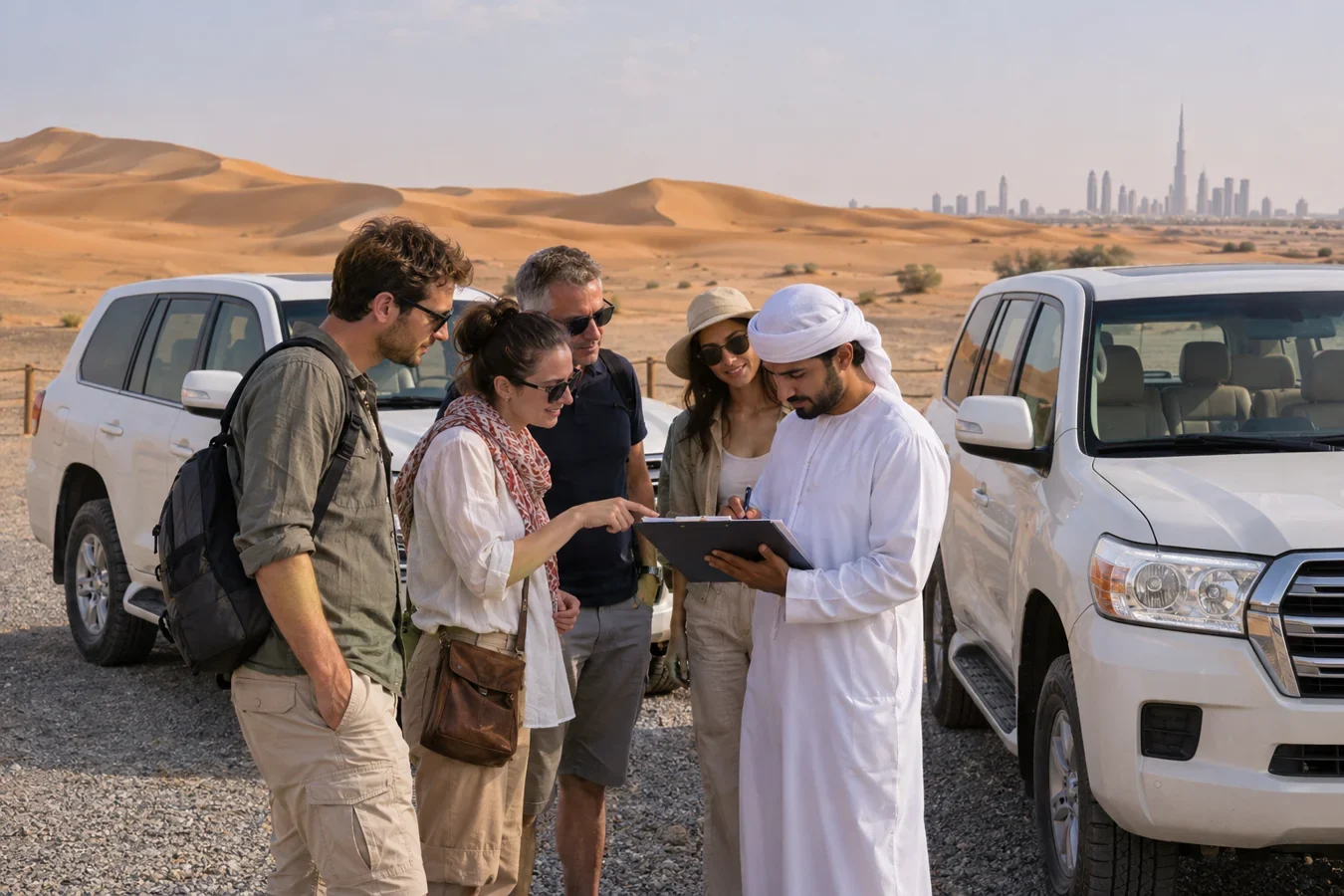
Image: AI-generated editorial illustration of a safari vehicle near desert dunes. It does not show a guaranteed vehicle, pickup point, or exact tour location.