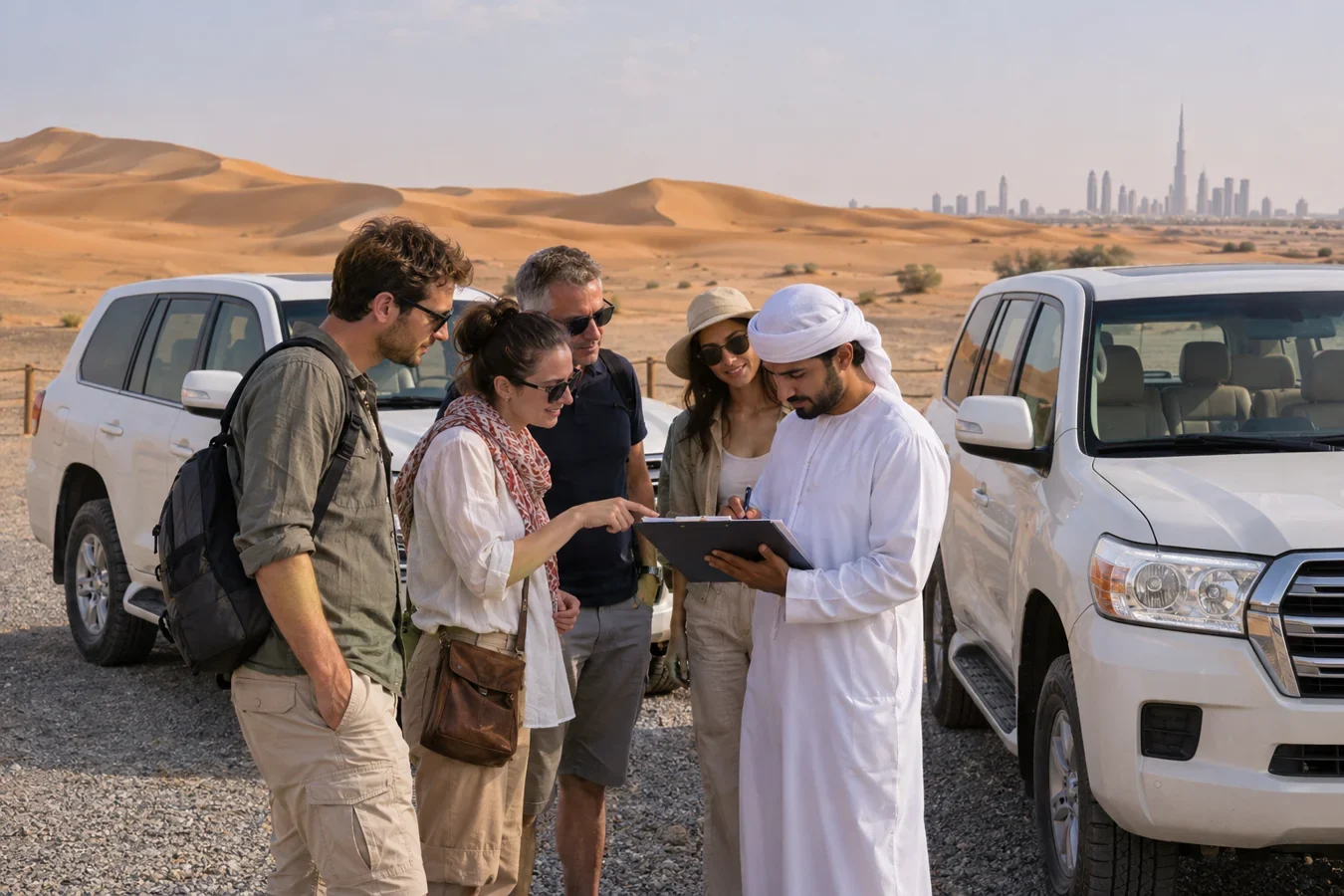
Should you take cash on a Dubai desert safari or pay by card? Ask the operator which costs you can settle before departure and what you might pay for at the stops. One booking can include several sellers. You may pay the tour company online, use a separate counter for an optional ride and pay for a small purchase at camp. Each can have its own payment methods.
This guide helps you plan for those separate payments. It covers the difference between an included item and a paid add-on, how to make a small cash plan and what to do if a card payment is unclear. Start with the price in writing and work through the trip in order. For a wider budget, see the Dubai desert safari cost guide.
List the places where you might pay
Look at the booking as a series of stops. The first payment may be the ticket itself, made online or to a booking office. The next could be for an optional activity after you reach the desert. At camp, you might choose to buy something beyond what the package covers. Ask which company or counter takes each payment and which items have to be reserved in advance.
Put only the things you expect to buy on your list. If the group already plans to take a particular ride, ask for the current price and whether it must be paid before you leave the city. If the group is still deciding about an upgrade, ask whether it can be added on arrival and whether the price changes. A short list makes it easy to see which stops matter for your payment plan.
Read the voucher before making a second payment
Keep the voucher where you can open it quickly. Look for the package name, number of guests and a list of inclusions. Check whether an item is included for every guest or only the people named on the receipt. If you bought an add-on, find the line that says what it covers. The price alone will not tell you whether it was for one seat or for everyone.
If you are asked to pay for something you think is covered, show the relevant line to the staff. Ask whether you are at the right counter for the included item. There may be a paid upgrade next to an included option. Give the staff your booking name and ask them to explain the difference before you decide. The desert safari booking checklist helps you collect the details that should appear on the confirmation.
Check which optional costs are separate from the tour
If you want to compare a standard trip with a safari that includes quad biking, ask which part of the quote covers the ride. Then compare it with the price to add the ride at the stop. Check the ride length, whether the price is per person or per vehicle and whether everyone in your group wants it. A lower ticket price can still cost more once you add the same extras.
The same approach works for seating upgrades or purchases at camp. Check what the base ticket includes, what the extra provides and how you pay for it. If you prefer to decide later, ask whether the advertised price will be available on the day. This gives you the freedom to choose without assuming there is always room or a fixed price.
Ask which payment methods work at each stop
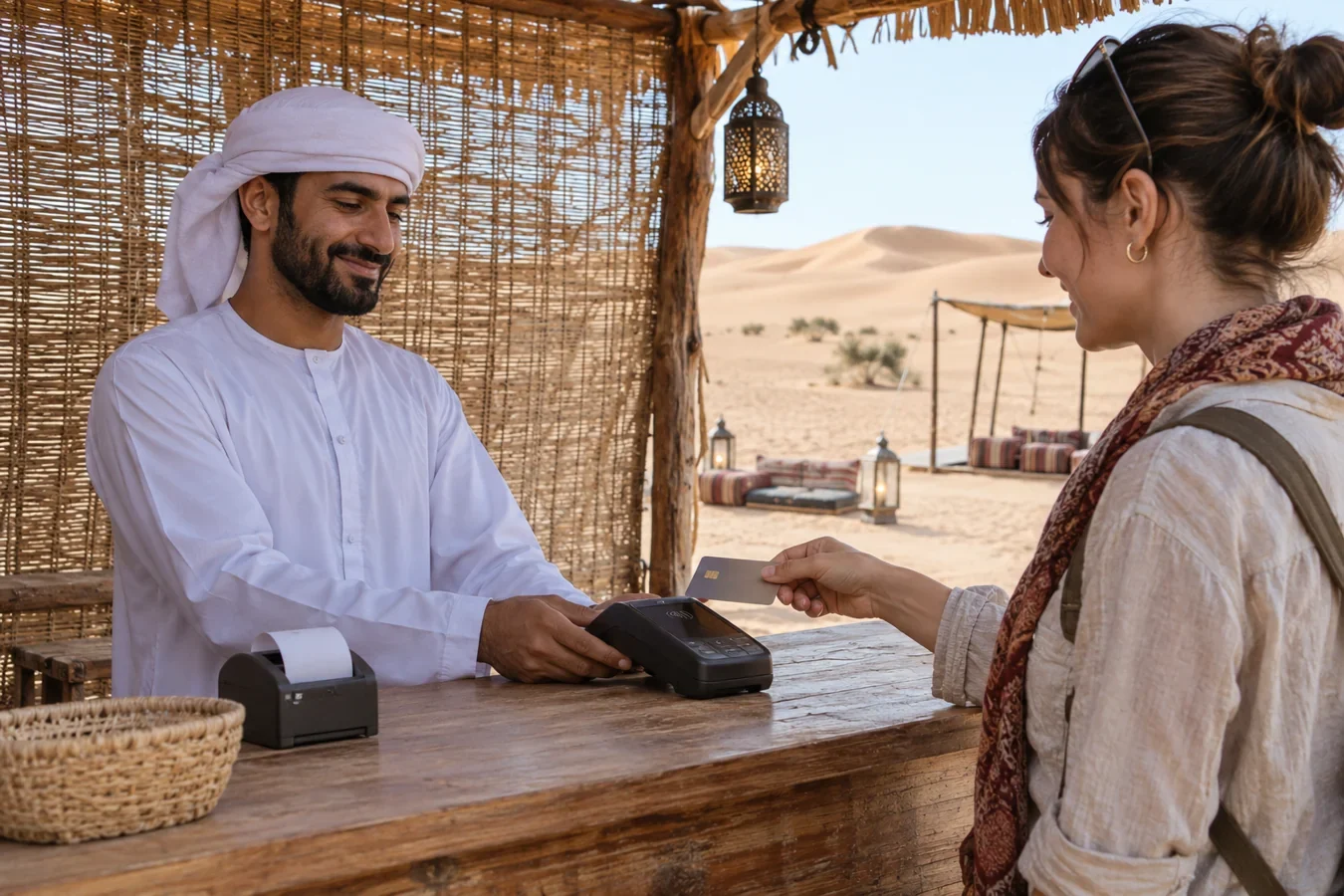
When you ask if you can pay by card, name the purchase you want. A booking team may take cards for the main ticket while an activity counter uses a different system. Ask if the counter accepts your type of card and whether you can use a physical card or phone wallet. If you want to use cash, ask which currency the seller accepts and whether it can provide change.
If a vendor tells you to pay in advance, ask for its normal booking process and a receipt showing what the payment buys. Make sure the payment request came through the contact you used for the booking. Check the amount and description before paying. If an unfamiliar link arrives, check with the operator through the booking channel you already know. Keep the receipt so you can show it at the stop if needed.
Plan a small cash backup around actual prices
Ask the operator for a price or range for the extras you are likely to buy. Use that information to choose a cash amount you are comfortable carrying. If your base ticket and all chosen add-ons are prepaid, you may only want a small backup for an unexpected purchase. If two purchases are cash-only, decide whether to bring enough for both or skip one.
There is no single cash amount that fits every trip. Imagine three friends with all activities paid who each want to buy a drink at a counter. They can ask for the menu price and keep a modest amount together. A different group that plans to pay for a ride on arrival may need to prepare for a larger bill. Both groups can make the decision once they know what is included and what they are likely to choose.
Find out what you can do if card service is down
Ask if the activity can be prepaid, whether the vendor has another payment option or whether the group can skip it without losing other parts of the tour. If you were only considering the extra, you can decide on the spot. If it is the main reason for going, get the payment and reservation details settled before departure. Confirm where the receipt must be shown and whether you can open it without relying on a fresh message.
If a card reader fails while you are paying, ask the staff whether the sale went through before you tap again. Compare the amount on the screen with the amount you agreed. If the result remains unclear, save any receipts or messages and ask the seller how to confirm the purchase. You can also check your card activity with your card provider. It is easier to resolve a question when you have the amount, seller and time in one place.
Work out how the group will pay
If one person pays for the whole booking, tell everyone what their share covers. Separate the cost of the tour from any optional spending. A guest who will skip a ride might still pay their share of the transfer and meal. A guest who ordered a separate item can pay for that item if the operator allows individual payments. Agree on the plan before you reach a busy counter.
If guests prefer to pay separately, ask the tour company whether it can link their receipts to the same booking. The booking team may need each name and a shared reference. Keep a record of who has paid for what. On the day, the organiser can use that record to settle questions while the rest of the group gets ready for the next stop.
Decide who approves extras for a family
Before the trip, agree on the items you will pay for and which ones are optional. You might tell children that they can choose one small treat after the meal or agree in advance whether anyone will do an extra ride. Give one adult the job of checking the price and placing the order. That way, the whole group hears the same answer.
If the group splits up at an activity stop, let each adult know where they can buy something, how they can pay and which time they need to meet the others. Keep the booking reference in a shared note. A second adult can then confirm which tickets were prepaid without asking the person on the ride to come back to the counter. The safari guide for families with children covers other ways to make stops easier.
Sort out personal purchases when travelling with friends
One way is to share the common costs and let each person pay for the extras they choose. Decide what to do if the counter can only take one payment for the whole group. If you agree that one person will pay, keep a simple record of who ordered what. Ask for the receipt and check it before leaving the counter. There is no need to share private card details to keep track of the amounts.
If people use different currencies, use the amount on the original receipt to agree who owes what. Ask anyone who needs a receipt for work or their own records to check with the seller at the time. A large group can choose one person to handle optional bookings and another to share the meeting time. That keeps payment questions from holding up everyone waiting to board.
Use a simple example to compare two packages
Suppose two guests are comparing a standard ticket at AED 260 total with a package at AED 340 total. The first quote covers transport and dinner. The second covers those same items and an extra that the guests are considering. If the first operator charges AED 90 for that extra on arrival, its total would be AED 350 if they buy it. If they skip the extra, the first quote stays at AED 260. The numbers are examples, so ask for current prices for your trip.
Now add payment. If the second quote includes the extra and you can pay for it with the ticket, you can arrive with a single receipt. If you choose the first quote and want to decide at the stop, ask who takes the extra payment and which methods they accept. Compare the convenience and the price. Also ask whether the ride or seat can still be booked on arrival, because that affects whether the cheaper plan is workable.
Look at what happens when only one person wants the extra
Two guests may share a booking even if only one wants to buy an add-on. Ask whether the package includes it for both people by default. If it does, get a second price for one guest. A separate add-on could make sense when one guest wants the activity and the other wants to watch or take a break. Ask where the second guest can wait and whether the ride changes the time you both leave.
The same calculation can apply to seating. An upgrade may need to cover the whole table, or the operator may let guests choose separately. Confirm the seating arrangement first if your group wants to stay together. For more questions about what the upgrade covers, see the Dubai VIP safari seating guide.
Leave a record of the amount and what it covers
When you pay for an optional item, ask for a receipt or confirmation. Check the item, amount and number of guests. If the purchase is for a time slot, write the start time and place to meet. Put the receipt with your voucher. A short note can also help when one guest pays and someone else needs to show that the purchase was made.
Keep the receipt until the outing is over and you have checked the charges. If something looks different, contact the seller with the receipt and booking reference. Explain which amount or item you are asking about. If the purchase affects your safari booking, tell the tour company too. The cancellation and rescheduling guide covers the questions to ask about changes and refunds before buying.
Make the plan fit the actual stops
Ask what can be bought while you wait, where you are allowed to take your own water and how long each stop normally lasts. If the schedule gives you only a few minutes, you may prefer to skip a purchase or settle it earlier. If you are travelling with a group, agree on where to meet before anyone joins a queue. You can use the Dubai desert safari timings guide to estimate which purchases could affect the rest of the outing.
Once you know the stops, list the payment details next to them. For example, put the booking receipt under pickup and a ride receipt under the activity stop. Add the amount, seller and payment method to each item. If a purchase is optional, write a maximum amount you are happy to spend. That makes it easier to decide without taking time away from the trip.
Know how a change to the tour affects a prepaid extra
Ask what happens if the operator changes the order of stops or if an activity cannot go ahead. If you booked the extra through a different seller, ask which company handles the change and what confirmation it needs. The tour and the extra may have separate terms. Keep both sets of details so you can contact the right person about the part that changed.
If the operator offers an alternative on the day, check what it covers and whether there is a price difference. Say whether you want to accept the replacement after you understand what will happen to the original payment. If you want to wait, ask when the team will know more and whether you can continue with the rest of the tour while they check.
Get the answer in one short message
Tell the booking team your date and group size. Then ask for a clear list of costs you need to settle before you leave, and which extras you can buy later. Include the specific items you want, whether each item is priced per guest or per vehicle, and whether any extra has its own payment method or receipt. Ask when the operator can confirm availability.
You could write, “We have four guests. Two are interested in an optional ride, and the other two will wait. Please confirm the total for the main tour, the ride price for those two guests, when we pay and which cards or cash the seller accepts. If we pay in advance, please tell us what receipt to show and what happens if the ride changes.” This gives the team enough detail to answer without guessing what your group wants.
Check the price unit before agreeing at the counter
A board can show one amount for a vehicle, one rider or a particular length of time. Read the part beside the number and ask the seller to say the total for your choice. A family buying two seats may want to know whether the price covers one vehicle with two riders or two separate vehicles. A guest adding a seat at camp can check whether that charge is for one chair or for everyone at the table. If the bill includes a separate fee, ask what it pays for before you agree.
Suppose a seller quotes AED 80 and your group asks for three of the same item. If the price is per person, the amount is AED 240 in this example. If the price is for the group, the amount is AED 80. If the first item is included with the safari ticket, the answer may change again. Repeat the number of guests and the total back to the seller so both of you are talking about the same purchase. This takes a moment and makes the receipt easier to check later.
Keep payment out of the boarding rush
If the group will pay at the stop, decide who will check in and who will settle the bill. Ask whether the purchase can be made as soon as you arrive or only when the ride or service is ready. Keep the phone with the voucher near the person paying. When the driver gives you a meeting time, share it before anyone goes to a separate counter. A guest who decides to skip an optional purchase can use the time for the stop they already booked.
Frequently asked questions
1. Do I need cash on a Dubai desert safari?
Ask which purchases you will pay for at the stops. If your trip is prepaid, you may only need money for extras. Confirm what the activity or camp seller accepts and decide on a backup for the items you want.
2. Can I pay by card at camp?
Ask the operator about the specific counter and purchase. The way you pay for the main ticket may differ from what the camp accepts. Check whether you can use a physical card or phone and what alternatives are available.
3. Are optional rides cheaper to buy in advance?
Ask for the prices in both cases and compare the same ride. Check the time, number of riders and any conditions for changing the booking. Also confirm whether you can get a spot if you wait to pay on the day.
4. How much cash should I carry for extras?
Use the quoted prices for the things you plan to buy and choose a backup that fits your budget. If most items are prepaid, your needs may be small. Ask which currency is accepted and whether the seller can give change.
5. What if someone asks me to pay for an included item?
Show the voucher and ask the staff to check the exact item and booking. It may be an optional version of a different included activity. Ask for the difference and the price before you agree to buy it.
6. Can only part of our group pay for a ride?
Ask whether the riders can buy it separately and where the rest of the group can wait. Confirm how the extra affects the pickup, stop or return time. Get the amount for the actual number of riders.
7. What if the card payment looks like it went through twice?
Keep any receipts and ask the seller to confirm how many sales it recorded. Save the booking reference, amount and time. Check the transaction with your card provider if the charge remains unclear.
8. Can friends pay their shares separately?
Ask the booking company or seller whether separate payments are possible and how they are matched to the same tour. If one person needs to pay, agree in advance which amount each guest will cover.
9. What happens to an extra if the activity is cancelled?
Ask who sold it and which terms apply. If the operator and activity seller are different, get the right contact for that purchase. Keep the receipt and ask whether the seller offers a change, credit or refund in your case.
10. What proof of payment should I take with me?
Keep the tour voucher, any separate receipts and a note of who paid. Save the details where you can open them quickly at the stop. A receipt should help show what the amount covers and which guests it applies to.