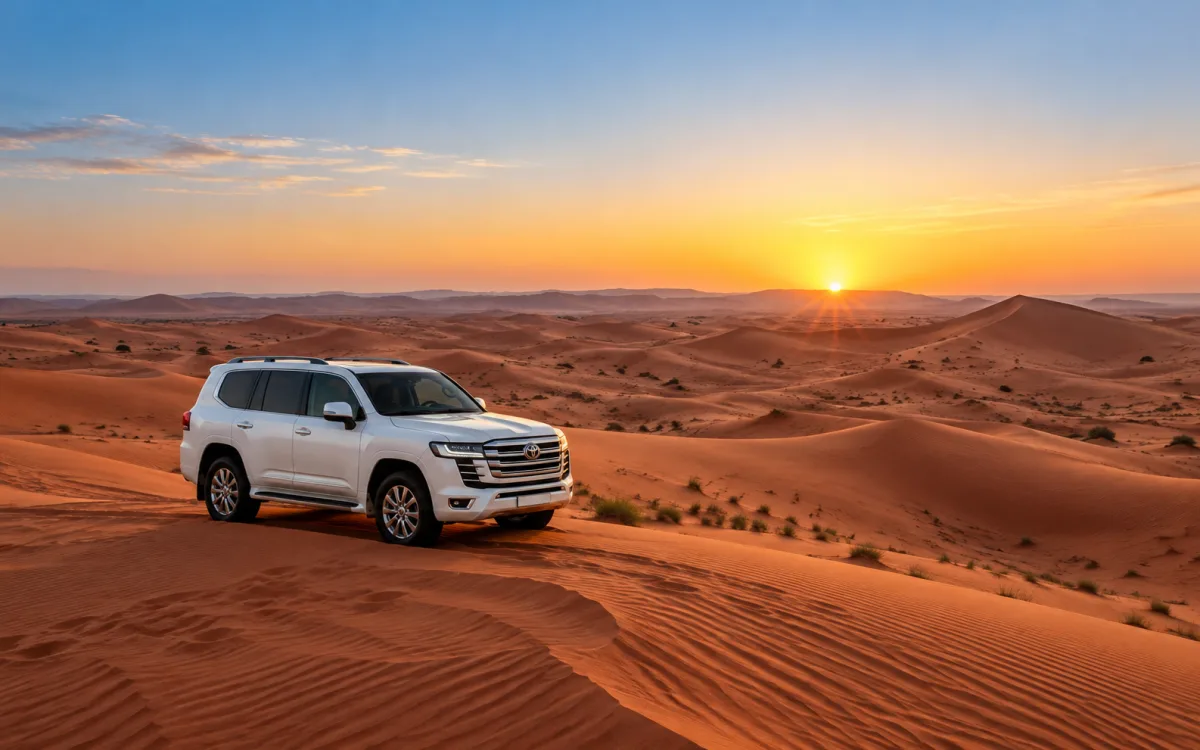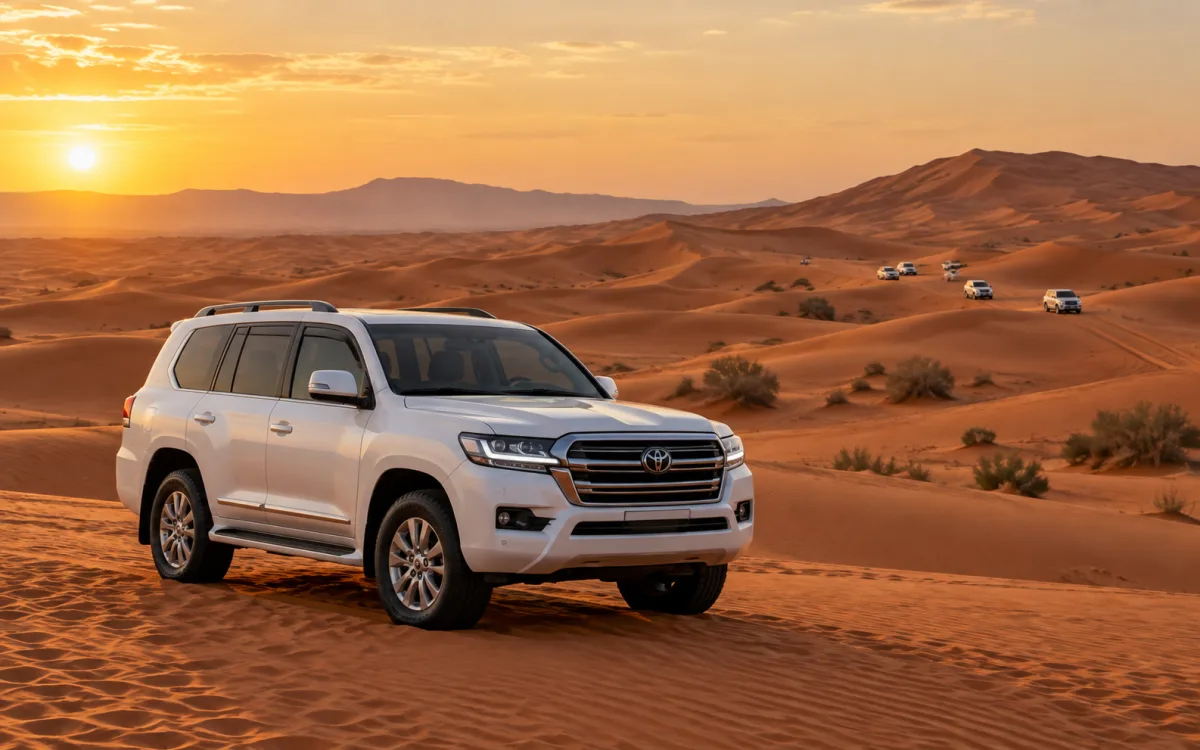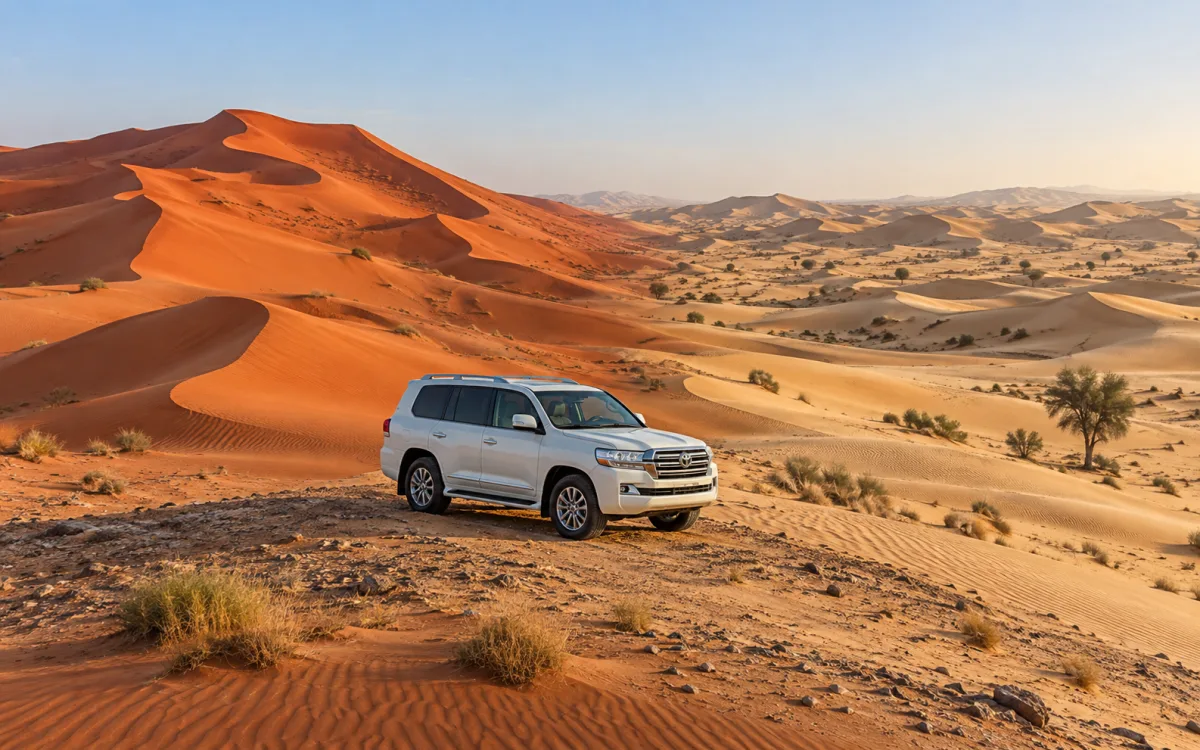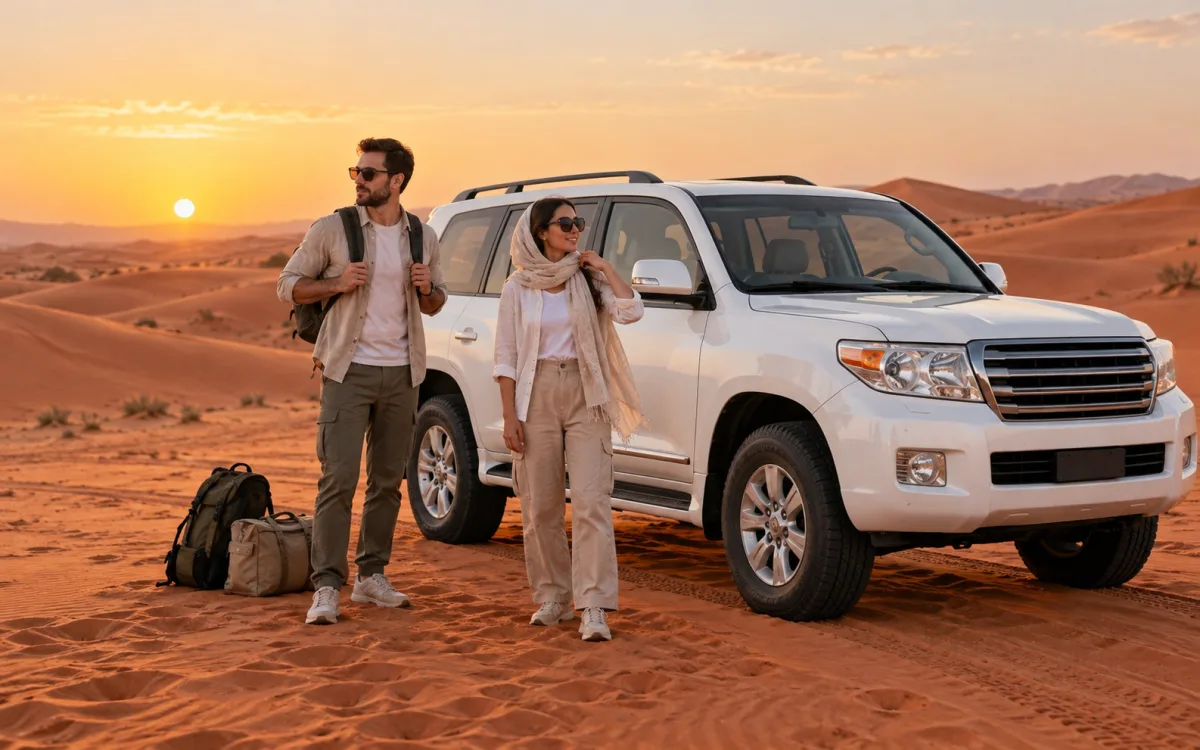
Desert safari outfit Dubai planning is mainly about comfort, sun, sand and movement. Wear lightweight, breathable clothing with secure shoes, then add sun protection and a layer for cooler winter evenings. Avoid anything very tight, very loose underfoot or difficult to manage during a camel ride, sandboarding session or 4×4 transfer. The exact outfit should reflect your tour, season and personal comfort.
The easiest outfit formula
A reliable starting combination is a breathable T-shirt or long-sleeved top, lightweight trousers, trainers or securely strapped sandals, sunglasses and a hat. Carry a light jacket or wrap from roughly November through March, especially for a sunset or evening tour.
This is practical guidance rather than a dress rule. Dubai is cosmopolitan, but respectful clothing is sensible in shared vehicles, family camps and public areas. The official Visit Dubai clothing guide recommends comfortable clothes, practical footwear and seasonal layers. Your operator's activity-specific requirements should take priority.
What top should you wear?
Choose a fabric that feels comfortable in warm weather and allows you to move easily. A breathable short-sleeved top works for many tours. A lightweight long-sleeved shirt adds sun coverage and can protect against blowing sand without feeling as heavy as a jacket.
Very loose sleeves, long scarves and dangling accessories can become awkward around vehicle doors or motorised activities. If your package includes a quad bike, secure loose fabric and follow the safety briefing. A staff member may require protective equipment or decline an unsafe item.
For an evening desert safari, remember that the tour spans more than one condition: a warm pickup, an exposed desert drive, sunset and time at camp after dark. A top that works with a light removable layer is more adaptable than one heavy item.
Trousers, shorts, skirts or dresses?
Lightweight trousers or flexible activewear are the most versatile choices. They provide sun and sand coverage, make it easier to step into a 4×4, and are practical for sitting astride a camel. Choose a comfortable fit that does not restrict your knees or waist during dune driving.
Shorts can be comfortable in hot weather, but exposed legs receive more sun and may contact warm sand or seats. If you wear shorts, a longer cut is often more practical for a shared family environment.
Long skirts and dresses can look attractive in photographs, but flowing hems are less convenient for camel mounting, sandboarding or motorised activities. If photography is the priority, bring the styled piece separately and change only where facilities, privacy and time allow. Do not let clothing trail near moving equipment.
The best shoes for a desert safari
Trainers are the dependable all-round choice. They stay secure during transfers and activities and protect your feet from hot sand, rough ground and camp walkways. Sand will still find its way inside, so wear a pair that is easy to clean rather than delicate footwear.
Secure sports sandals can work for a relaxed camp-focused trip. Flip-flops are easy to shake clean but offer little stability for sandboarding, climbing a dune or entering a high vehicle. High heels are impractical on sand.
If your itinerary includes a self-drive activity, closed shoes may be required. Check the rules for the quad-bike desert safari before departure, because footwear, age and protective-equipment requirements vary by operator and riding area.
What to wear in the cooler months
From November through March, daytime conditions can feel pleasant while temperatures after sunset feel much cooler, especially when there is wind. Dress in layers: a breathable base plus a light jacket, cardigan or wrap that fits easily in a small bag.
Children and older travellers may appreciate an extra layer sooner than other guests. If you are joining a longer night or overnight itinerary, ask the operator what bedding or cold-weather items are supplied rather than assuming the camp provides everything.
A winter outfit still needs sun protection. Cool air can disguise how much direct sun you receive during a morning or afternoon stop.
What to wear in the hotter months
From late spring through early autumn, prioritise breathable fabrics, sun coverage and minimal layers. Light colours can feel more comfortable in direct sun, while a loose overshirt gives adjustable coverage. Avoid heavy denim, thick synthetic layers and complicated outfits.
Clothing cannot eliminate heat risk. Drink water as advised, avoid overexertion and tell the operator about relevant medical needs. For schedule choices, compare a morning and evening safari; the actual pickup time matters more than the label alone.
Even in summer, air conditioning inside the transfer vehicle may feel cool to some guests. A very light layer can be useful without taking much bag space.
Sun, sand and skin protection
Apply broad-spectrum sunscreen before pickup and bring a small container for reapplication if permitted. Sunglasses help with glare, while a secure hat shades the face. A hat that blows away easily can become a distraction on an exposed dune, so choose a close fit or keep it in your bag during windy stops.
A light scarf or buff can help when sand is blowing, but it should be easy to secure and remove. People who wear contact lenses may prefer glasses on a windy day. Pack any essential medication in its original container and disclose health concerns that could affect the itinerary.
Outfit advice by activity
Dune bashing
Wear clothes that allow comfortable sitting and use the seat belt exactly as instructed. Empty bulky pockets and secure phones, cameras and loose accessories. Tell the driver promptly if you feel unwell.
Camel riding
Trousers or longer shorts make mounting and sitting easier. Secure bags and listen to the handler before the camel stands or kneels. Camel rides included in standard camps may be brief; details vary by package.
Sandboarding
Flexible trousers or shorts and secure shoes are practical. Sandboarding is weather- and terrain-dependent, so it may be moved, shortened or unavailable on the day.
Quad biking or dune buggies
Closed shoes, secure clothing and supplied protective equipment are the sensible baseline. Each operator sets its own age, passenger, route and equipment rules. Never tuck a long scarf or loose garment where it could reach a moving part.
Dinner and camp shows
There is usually no need to dress formally. Choose clean, comfortable clothes suitable for shared seating and outdoor dining. If the tour includes another venue or special event, ask whether a separate dress requirement applies.
What to pack in a small safari bag
- Sunscreen and lip balm.
- Sunglasses with a protective case.
- A secure hat or cap.
- A lightweight evening layer in cooler months.
- Necessary medication and tissues.
- A power bank if you expect to take many photos.
- A sealable pouch for your phone during sandy or windy stops.
Keep the bag compact. Large luggage may not fit safely in a shared 4×4 and should be disclosed before pickup. Avoid carrying valuables that you do not need.
What not to wear
Avoid high heels, restrictive formalwear, delicate white shoes and heavy clothes that become uncomfortable in heat. Leave expensive jewellery at the hotel. Limit loose scarves, long trailing hems and unsecured accessories if the tour includes riding or motorised activities.
Do not wear an outfit solely because it appeared in a staged photograph. The real itinerary may involve a high vehicle step, wind, shifting sand and several hours outside. Practical clothing makes the experience easier and photographs can still look excellent.
A final check before pickup
Review the forecast, pickup time and confirmed activity list. The Dubai desert safari package guide helps you identify whether your day includes a morning route, full evening camp, quad bike or gentler option. For anything unusual—professional photography clothing, mobility aids, infant equipment or large bags—contact the team before the vehicle is assigned.
Frequently asked questions
Can I wear shorts on a Dubai desert safari?
Yes, shorts are commonly worn, but a comfortable longer cut is more practical for sun exposure, shared seating and camel riding. Choose according to your comfort and activities.
Are sandals suitable for a desert safari?
Secure sandals can work for a relaxed programme, but trainers give better protection and stability. Motorised activities may require closed shoes, so check the confirmed rules.
Do I need a jacket in the Dubai desert?
A light layer is useful on cooler-season evenings and for anyone sensitive to air conditioning. Check the forecast because wind and daily conditions vary.
What colour is best for desert photos?
Solid colours that contrast with red or golden sand photograph well, but comfort and sun coverage matter more. Avoid trailing garments near vehicles or activities.
Is there a dress code at the desert camp?
Most safari camps favour casual, respectful clothing rather than formal dress. Venue and event rules can differ, so ask if your booking includes a special location.
Can I bring a change of clothes?
Usually a small extra layer or top is manageable, but changing facilities and luggage space are not guaranteed. Confirm both in advance.
Dress for the experience you booked
The right desert safari outfit is breathable, secure, easy to move in and adaptable after sunset. Match your clothes and shoes to the activities in your confirmation, then check the weather close to departure. Requirements and availability vary by operator, season and package, so ask before pickup when an item or activity is important to you.