The Lahbab vs Al Awir desert safari choice is mainly about scenery, route and package design—not a simple good-versus-bad ranking. Lahbab is widely marketed for its red-dune landscape and dramatic dune views. Al Awir is commonly used for convenient safari circuits with golden-to-reddish sand and access to established camp experiences. Either area can deliver an enjoyable trip, while a vague or poorly specified package in either location can disappoint. The better option is the one whose confirmed route, transfer, activities and price fit your priorities.
Quick verdict
Choose a Lahbab or red-dune itinerary when distinctive red sand, expansive dune photographs and a landscape-focused drive are your priorities. Choose an Al Awir itinerary when you value a potentially more straightforward transfer or a conventional evening safari format and the specific package offers the inclusions you want.
Those are useful tendencies, not guarantees. Exact travel time depends on your pickup point and traffic. Dune colour changes with light, and the intensity of a drive depends on the route, conditions and driver—not only the district name. Some sellers use Red Dunes as a broad marketing phrase, so ask for the actual desert area in writing.
Visit Dubai's official desert safari overview explains the familiar format of 4x4 desert driving followed by activities and a camp experience. It does not rank Lahbab against Al Awir or set universal routes; those details belong to the individual operator and package.
What is a Lahbab desert safari?
Lahbab is associated in the safari market with deeper red-toned sand and visually striking dune terrain. Packages labelled Lahbab, Red Dunes or Big Red often appeal to travellers who want bold scenery and a more landscape-led experience. Our red dunes desert safari Dubai package shows the type of itinerary to consider when the dune setting is a deciding factor.
What is an Al Awir desert safari?
Al Awir is another established area used by Dubai safari operators. It appears frequently in shared evening itineraries and can offer open desert scenery, dune driving and access to camp programmes. Depending on the pickup location and the operator's routing, it may be a practical choice for visitors who want the standard safari sequence without selecting a premium red-dune label.
Lahbab vs Al Awir: the differences that matter
Sand colour and photography
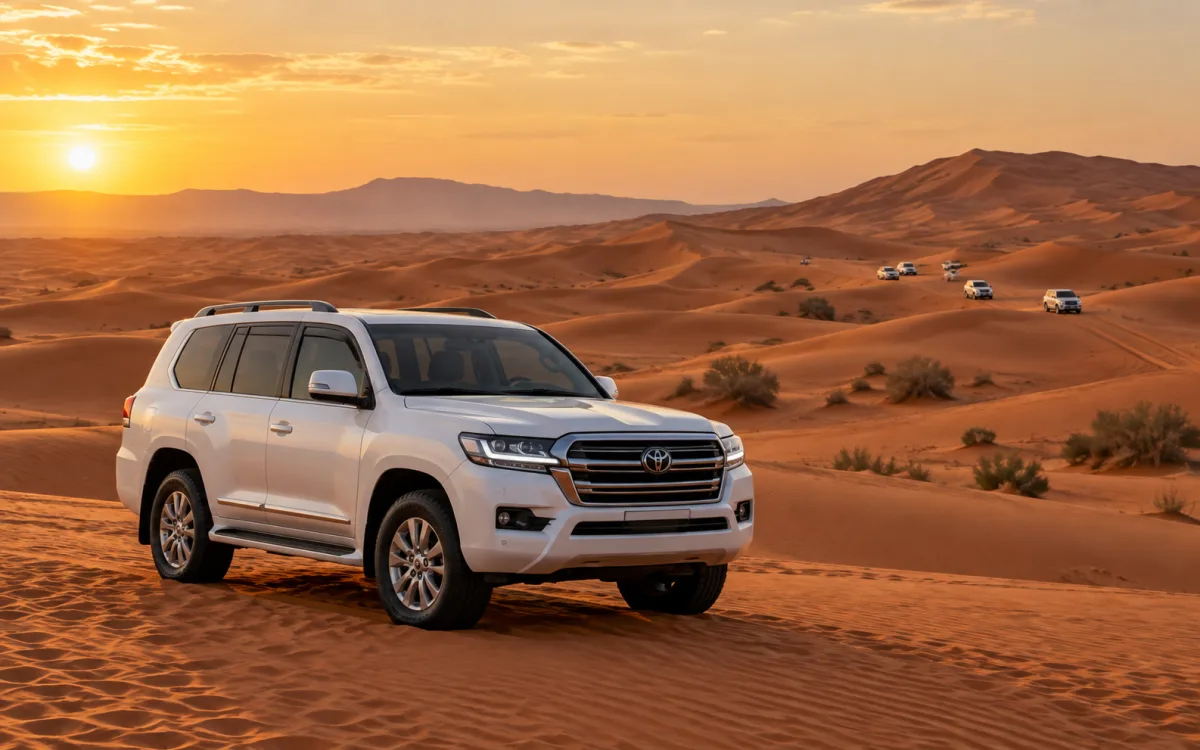
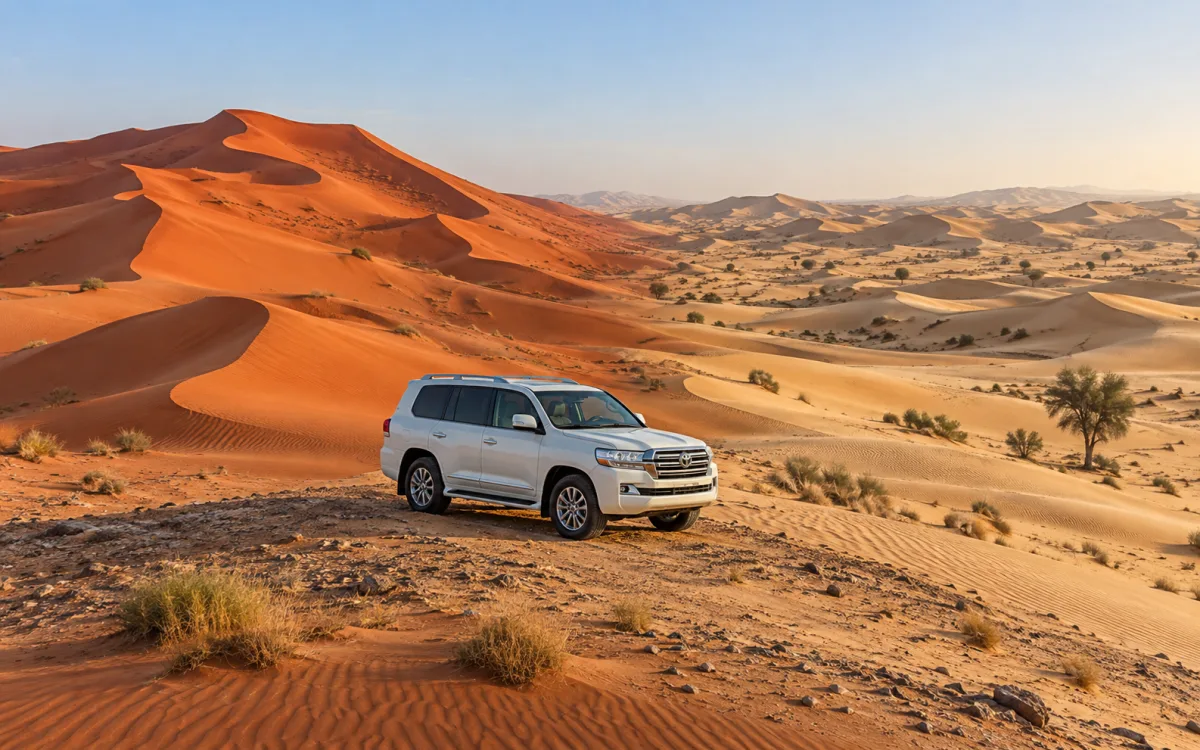
Lahbab's strongest selling point is its red-dune identity. Under clear morning or late-afternoon light, the warm sand can create strong contrast with a white Land Cruiser and blue sky. This makes it a popular choice for travellers prioritising photos.
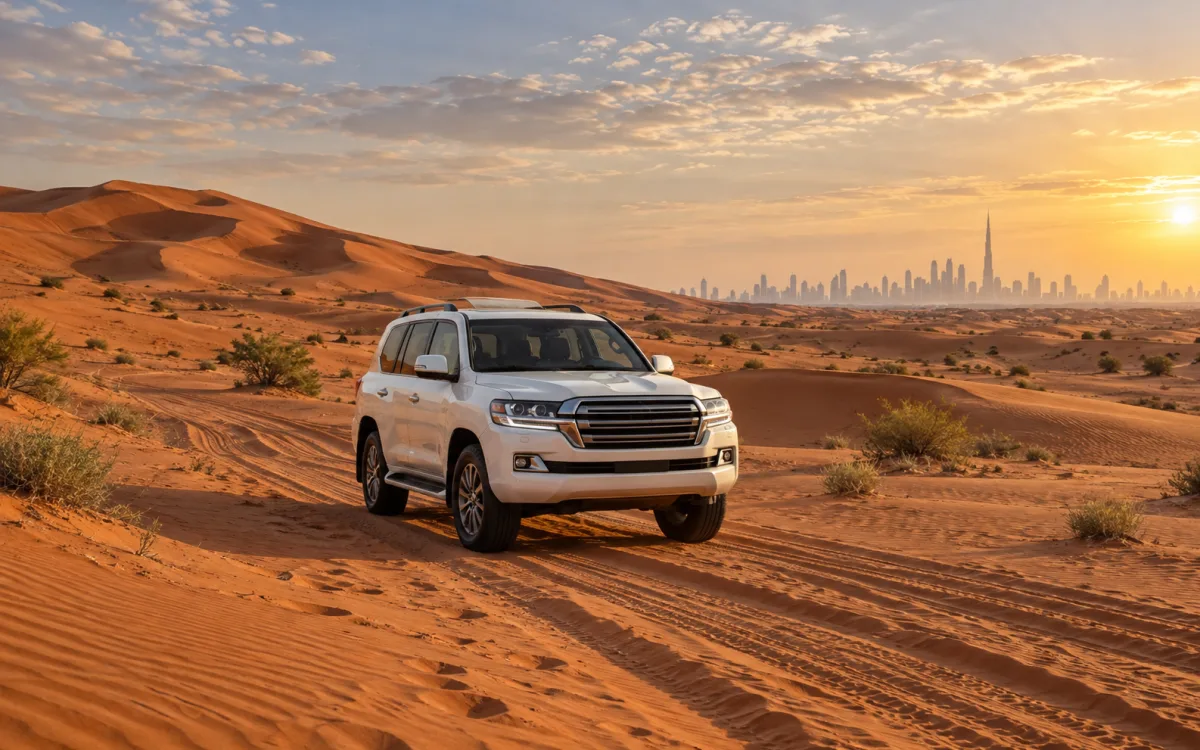
Al Awir can still provide attractive desert scenes, especially near sunrise or sunset. Photographic results depend heavily on the selected stop, cloud cover, wind and the time allowed. Neither destination guarantees an empty backdrop or a specific sunset. Ask whether a dedicated photo stop is included and whether the group can safely leave the vehicle.
Dune drive style
Marketing often describes Lahbab as the more adventurous option because of its dune terrain. That does not mean every Lahbab drive is more intense, nor that an Al Awir drive is always gentle. Drivers select routes according to conditions, passenger comfort, convoy procedures and safety requirements.
Transfer and total duration
Lahbab may involve a longer transfer for some central Dubai pickups, but hotel location, traffic, shared collection order and the operator's base all affect the journey. Al Awir may be more convenient on some routes, yet there is no universal drive-time advantage.
Ask for a pickup window, estimated return and shared-versus-private status. Then leave a buffer rather than scheduling an immediate airport transfer or important reservation. Our guide to desert safari Dubai timings explains why a pickup window is more realistic than a promise to the minute.
Camps and entertainment
A dune area and a safari camp are not necessarily the same place. Two tours can drive similar dunes but use very different camps, food service and seating. Conversely, Lahbab and Al Awir-labelled packages may end at camps with comparable evening programmes. The evening desert safari Dubai package provides a useful baseline for checking a complete sunset-and-camp itinerary.
Price and value
Lahbab or red-dune tours are sometimes positioned at a premium, but naming alone does not justify a higher rate. A higher price may reflect a private vehicle, longer route, better camp, more activities or simply a different seller. Al Awir packages can also range from basic shared transport to premium private service.
Compare like with like:
- Shared or private 4x4 transfer.
- Pickup area and any surcharge.
- Stated desert location.
- Approximate dune-drive and photo-stop plan.
- Camp access, food and entertainment.
- Included versus optional activities.
- Taxes, booking fees and upgrade costs.
- Cancellation and weather terms.
Use the Dubai desert safari price guide to evaluate the full offer rather than choosing the lowest headline. An inexpensive package is not a bargain if the activity you expected is an add-on.
Which area suits different travellers?
First-time visitors
Either area can work. A first-time visitor should prioritise a clearly described, well-paced itinerary with transparent inclusions. If the classic image of red dunes is central to the dream, select a package that explicitly confirms Lahbab or an equivalent red-dune route.
Couples and photographers
Lahbab often has the visual edge for travellers seeking rich sand colour and dramatic vehicle photographs. A private vehicle can create more flexibility for stops, but no operator can guarantee light, weather or an empty landscape. Ask what photo opportunities are planned rather than requesting unsafe stops.
Families
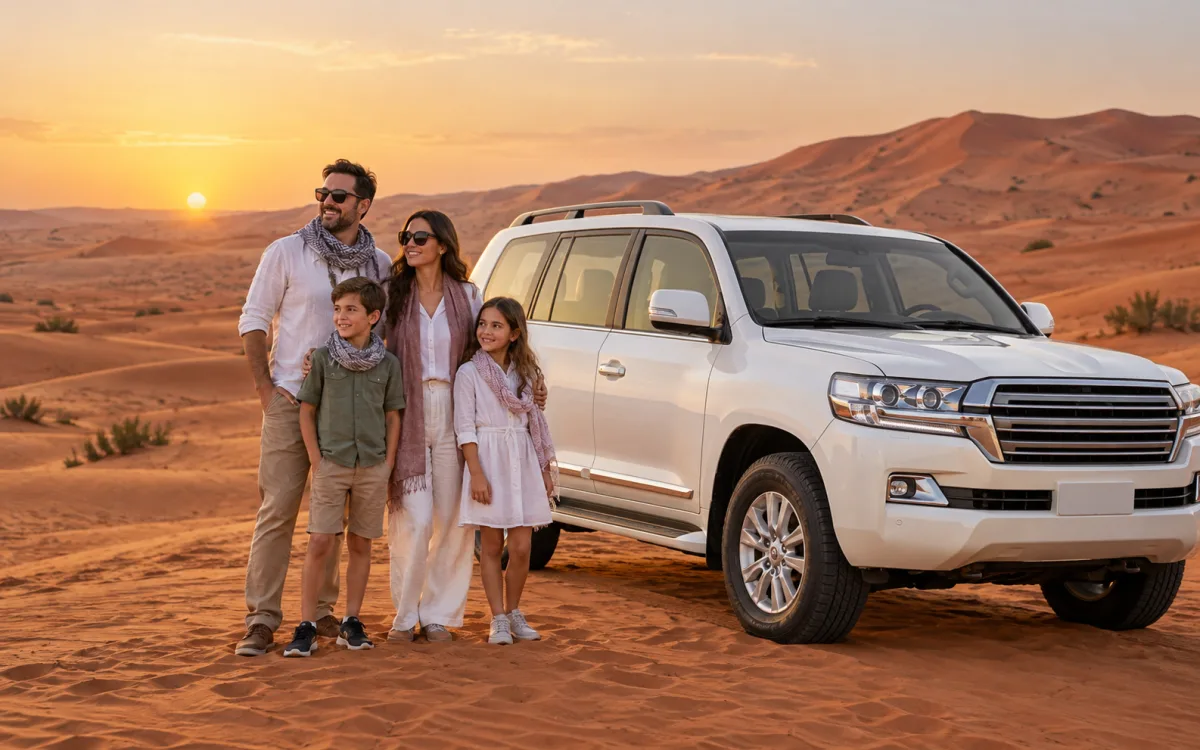
For families, vehicle setup, restraint arrangements, timing and dune-drive intensity matter more than the area label. A shorter or more adjustable itinerary may outperform a longer scenic route for younger children. Review the private desert safari Dubai package if control over pacing is important, and confirm all child policies directly.
Adventure-focused guests
Look beyond words such as extreme. Ask about the planned dune-drive segment, optional sandboarding and whether quad biking is operated separately. All activities remain subject to participant rules, conditions and staff instructions. Adventure never removes the need for a seat belt or professional safety decisions.
Time-conscious travellers
Choose based on confirmed door-to-door timing, not a map estimate alone. A private transfer may reduce collection stops, though traffic and desert operations still affect return. If you have a hard deadline, disclose it before payment and be prepared to select another day.
Questions that reveal what you are really buying
Before choosing between Lahbab and Al Awir, ask the seller:
- Which named desert area will the vehicle enter?
- Is the route guaranteed or subject to operational change?
- Is the transfer shared or private?
- What is the pickup window for my exact location?
- How is the dune portion described, and can it be adjusted?
- Is there a dedicated photo stop?
- Which camp is used and what does it include?
- Which activities cost extra?
- What is the estimated return window?
- What happens if weather or safety conditions change the route?
A reputable answer should separate confirmed inclusions from estimates. Be cautious when a seller guarantees the highest dunes, an exact sunset or a fixed return minute without accounting for conditions.
Common booking mistakes
The first mistake is choosing only from the cheapest advertised rate. The second is assuming every red-dune listing means Lahbab. The third is comparing two tours with different transfer types as though they are the same product. Other avoidable errors include leaving a child-seat request until pickup, overlooking paid activities, and booking around a tight flight connection.
Screenshots of a listing are helpful, but keep the final voucher and written confirmation. If the desert area is essential to your decision, make it an explicit booking condition and ask how route changes are handled. You can include these questions on the booking page so the team can recommend the closest match.
Frequently asked questions
Is Lahbab better than Al Awir?
Lahbab is often better for travellers prioritising red-dune scenery, while Al Awir can be a strong choice for a conventional safari itinerary. Package quality, transfer, driver, camp and inclusions matter more than the label alone.
Are Lahbab dunes always higher or more exciting?
Do not treat that as a guarantee. Terrain varies within an area, and drivers adapt routes to conditions and passengers. Ask how the actual package is operated rather than relying on a superlative.
Is Al Awir closer to Dubai?
It may be more convenient from some pickup points, but there is no universal answer. Your location, traffic, collection order and operator route determine transfer time.
Which area is better for sunset photos?
Both can produce attractive sunset scenes. Lahbab is favoured for red-sand colour, while the final result depends on weather, timing and the photo stop. No safari can guarantee a particular sunset.
Can I confirm the desert location before booking?
Yes—ask the seller to name it in writing and explain whether operational changes are possible. If a listing remains vague, use the contact page to request clarification before paying.
Final recommendation
For dramatic red-dune scenery, a clearly confirmed Lahbab itinerary is the stronger match. For a traditional safari where transfer convenience, camp programme or value takes priority, a well-specified Al Awir package may be equally satisfying. Compare the whole door-to-door experience, insist on clear inclusions and choose the operator's confirmed plan—not just the most exciting location name.